
At a time when the
Indian National Congress is searching for oxygen in Maharashtra’s bruising
political climate, Latur is not just a bright spot—it is a blueprint. The
recent Zilla Parishad and municipal results did more than deliver numbers; they
delivered proof of concept. In a state where the Congress struggled to stay
relevant across most districts, Latur showed that the party can still win
decisively when it gets the basics right: leadership, organisation, and
delivery.
The numbers matter.
Across 12 Zilla Parishads in the recently concluded polls, Congress managed to
secure 59 seats statewide. Of these, a remarkable 23 came from Latur
alone—making it the single largest contributor to the party’s tally. This
wasn’t a narrow escape or a fragmented mandate; it was dominance. Add to that
the Congress victory in the Latur Municipal Corporation, and you have a
contiguous governance base—rural and urban—under one political command. In
today’s politics, that kind of coherence is rare.
What makes Latur
different? The easy answer is legacy—and legacy does matter. The shadow of
Vilasrao Deshmukh still looms large over the district. For many voters, his
tenure represented stability, dignity, and development delivered without noise.
But to reduce Latur’s success to nostalgia alone would be lazy analysis. Legacy
opened the door; organisation walked through it.
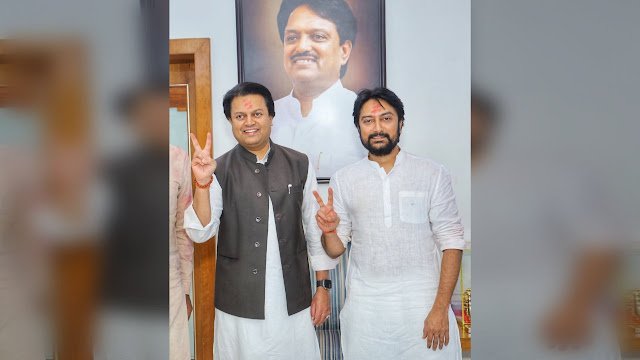
The current generation
of leadership—most visibly Amit Deshmukh and Dhiraj Deshmukh—has translated
inherited goodwill into modern political machinery. Booth-level discipline,
early candidate finalisation, local issue ownership, and constant voter contact
were not accidental choices; they were strategic decisions. While elsewhere the
Congress often appeared episodic and reactive, in Latur it was present,
predictable, and grounded.
There is a deeper economic foundation to this
political durability—rooted in the
cooperative revolution that Congress initiated 30–40 years ago. In
Latur, that vision continues to take shape through the leadership of the
Deshmukh family across two generations.
Institutions like the
Manjara Shetkari Sahakari Sakhar Karkhana and the Latur District Central
Cooperative Bank reflect this legacy. Under the stewardship of the Deshmukhs,
they sustain a rural circular economy linking credit, cultivation, processing,
and employment. Farmers receive crop loans, grow sugarcane, supply it to the
cooperative factory, earn income, repay credit, and reinvest locally—ensuring
economic value stays within the district.
This enduring cycle has
built generational trust and economic interdependence. In Latur, Congress is
embedded not just in memory, but in livelihood structures shaped and sustained
by the Deshmukh family.
This is precisely why
Latur should be read not as an exception but as a template.
First, Latur proves
that local governance still wins elections. Control of the municipal
corporation allowed the Congress to show visible work—on civic services, local
infrastructure, and grievance redressal—before asking for votes again in the ZP
elections. Voters responded not to slogans, but to familiarity and performance.
For a party frequently accused of being abstract and disconnected, this is a
crucial lesson: power at the bottom rebuilds credibility at the top.
Second, Latur
demonstrates the value of clear leadership centres. One of the Congress’s
chronic problems in Maharashtra has been diffused authority—too many voices,
too little accountability. In Latur, the chain of command is unambiguous.
Cadres know who leads, candidates know who backs them, and voters know who to
credit—or blame. That clarity breeds confidence, internally and externally.
Third, the district
shows that identity politics need not be polarising to be effective. Latur’s
politics is rooted in regional pride and social coalitions without aggressive
ideological posturing. The Congress here did not try to out-shout its rivals;
it out-organised them. In an era of high-decibel campaigning, Latur’s quieter,
relational approach is not just refreshing—it is electorally potent.
Critics will argue that
Latur is unique, that the Deshmukh legacy cannot be replicated elsewhere. They
are half right—and entirely wrong. Names cannot be cloned, but methods can. The
Congress does not need another Vilasrao Deshmukh in every district; it needs
empowered local leaders, protected organisational space, and the patience to
let governance speak before elections do.
Can Latur alone revive
the Congress in Maharashtra? No. But can Latur show the Congress how to revive
itself? Absolutely.
If the party is serious
about rebuilding, it must stop treating Latur as a sentimental outlier and
start treating it as a case study. Replicate the municipal-to-ZP pipeline.
Invest in district satraps instead of parachuting central faces. Measure
success not in press conferences but in potholes filled and water lines fixed.
Maharashtra does not lack Congress voters; it lacks Congress confidence. Latur
shows how that confidence can be rebuilt—brick by brick, booth by booth.
In a state desperate
for an alternative narrative, Latur is not just hope. It is instruction.